01
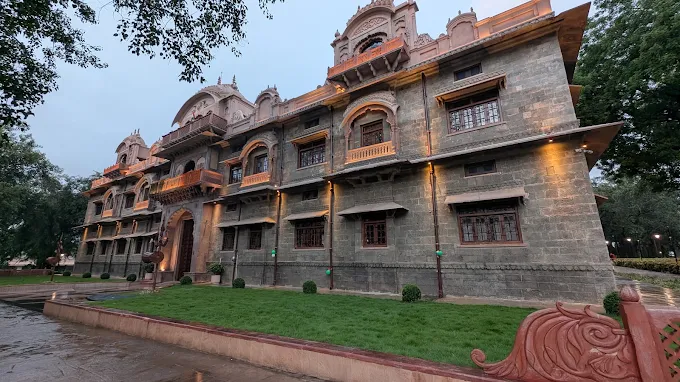
The Grand Facade
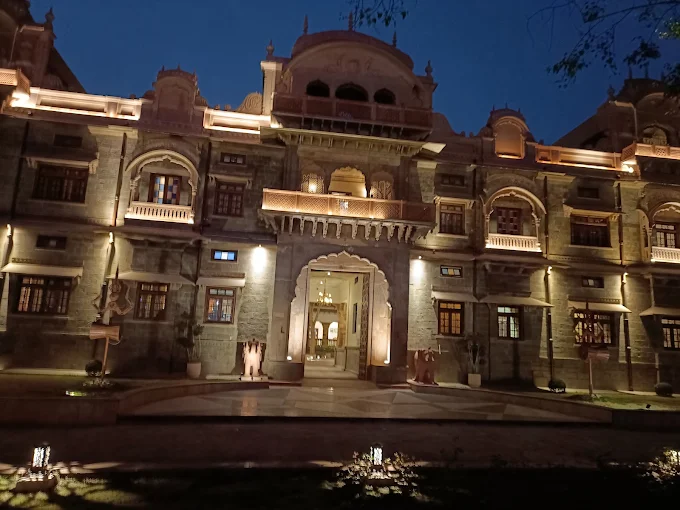
Strong stone surfaces, layered balconies and arched openings create a stately exterior that looks especially dramatic in changing light.

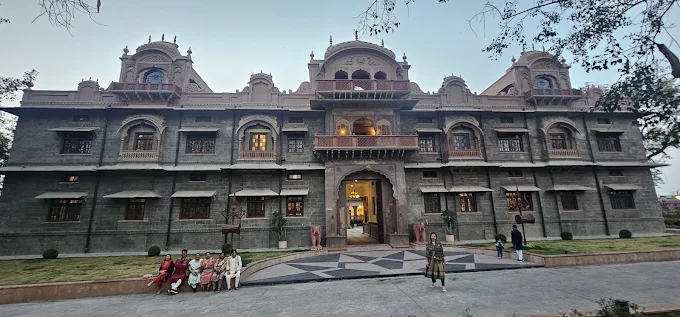
Architecture, sacred location and contemporary comfort come together in a property designed to make the stay itself part of the Ujjain experience.
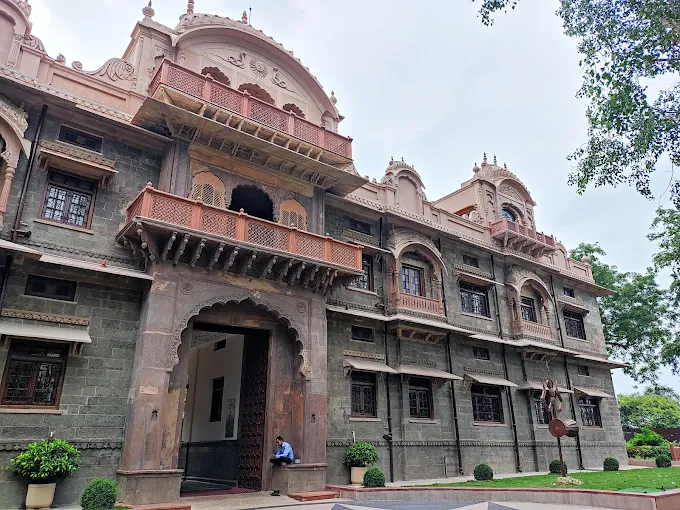
MPT Samrat Vikramaditya The Heritage has the scale and visual presence to immediately separate itself from a standard modern hotel.
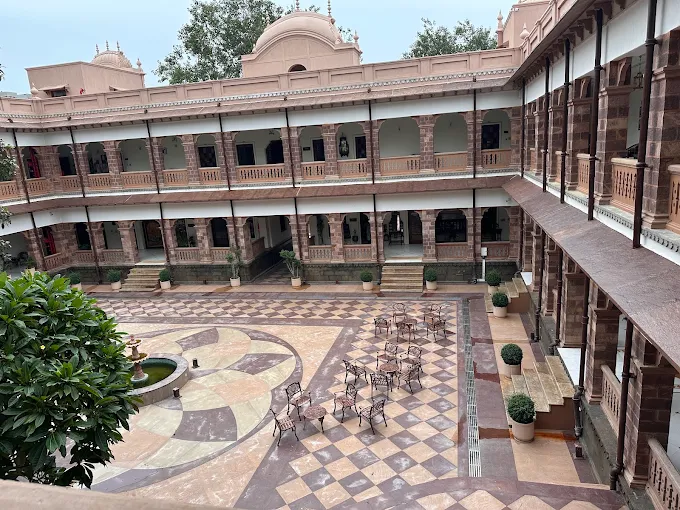
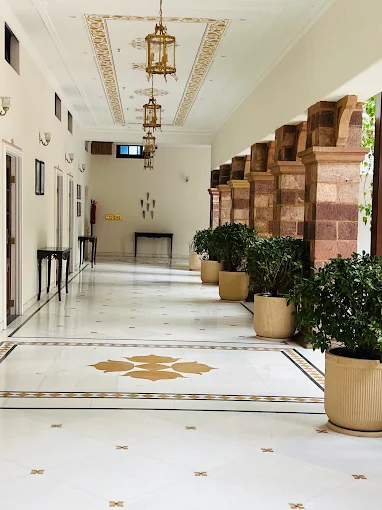
Its stone facade, projecting balconies, ornamental arches and broad central gateway establish a royal vocabulary before guests even reach their rooms. Inside, the mood continues through patterned floors, decorative ceilings, long corridors and an open courtyard that serves as the architectural heart of the complex.
The restoration gives visitors a chance to experience a more atmospheric side of Ujjain without giving up the practical comforts expected during a pilgrimage, family holiday or cultural visit.
Most importantly, the hotel sits close to Mahakaleshwar Temple. That connection between heritage and spiritual location makes the property especially suited to travellers who want their accommodation to feel rooted in the destination.
The experience changes as you move through the property—from monumental exterior views to intimate interior details.
Strong stone surfaces, layered balconies and arched openings create a stately exterior that looks especially dramatic in changing light.
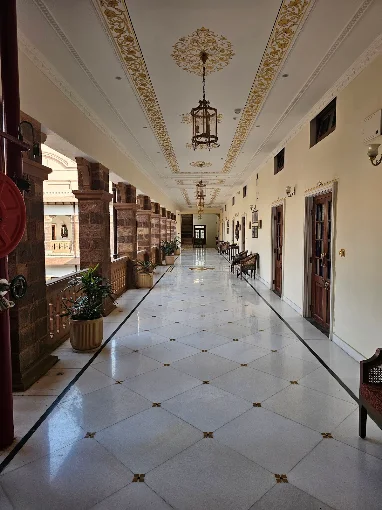
Long passages connect rooms and shared spaces while keeping the courtyard visible, giving every walk through the hotel a sense of continuity.
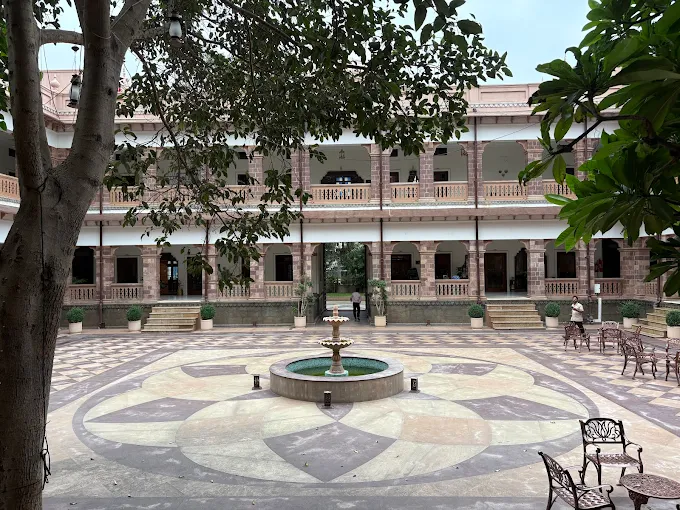
A patterned open square and fountain create a quieter centre within the property—ideal for a pause between temple visits and city exploration.
The hotel’s name draws on one of the most enduring royal names associated with the cultural imagination of Ujjain.
Across Indian tradition, Vikramaditya is remembered as an idealised ruler connected with learning, justice, courage and the prestige of ancient Ujjain. The name therefore gives the property a strong symbolic identity, but the hotel experience is best understood through what is visible today: restored architecture, heritage styling and a location close to the city’s most important sacred zone.
The design does not need exaggerated claims to feel regal. Its proportions, stone surfaces, balconies, galleries and courtyards already create a setting where the idea of royal Ujjain feels naturally present.
Important: The hotel is a restored heritage property named after Samrat Vikramaditya. This site does not claim that the building itself was the historical palace or residence of the legendary ruler.
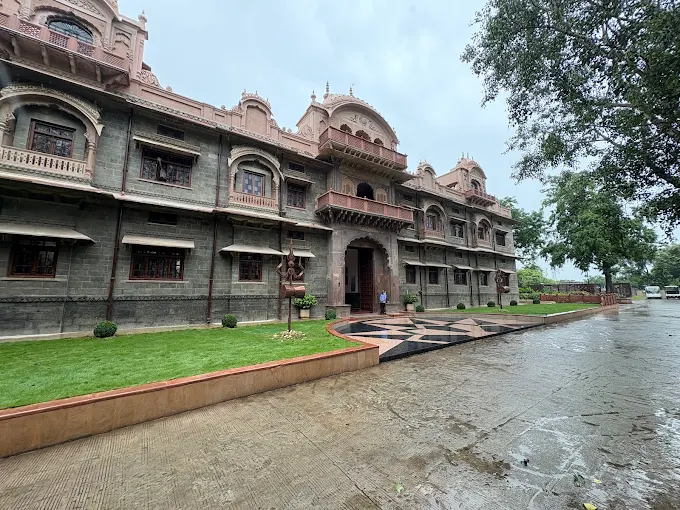
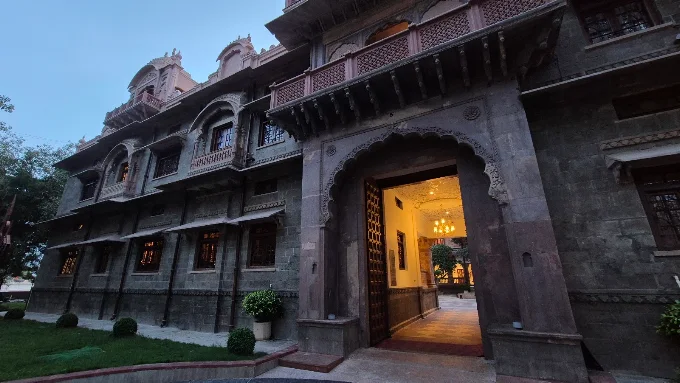
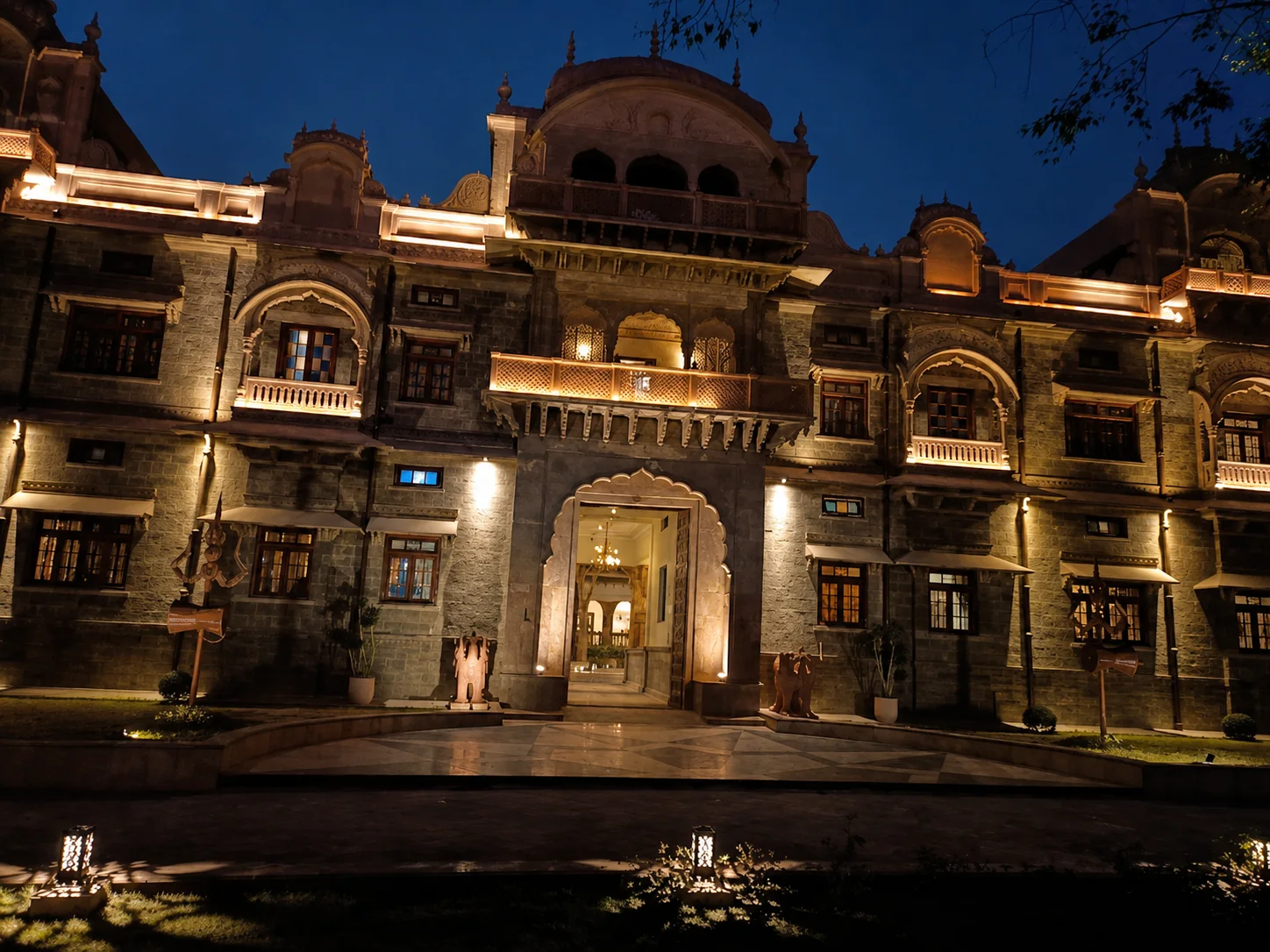
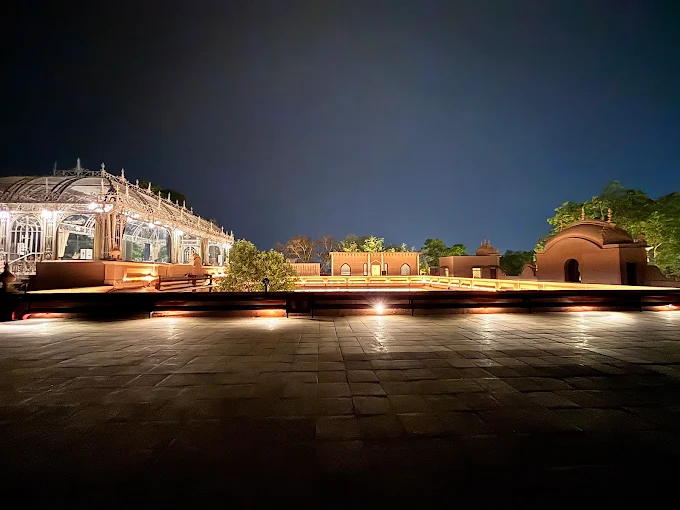
In the morning, stone surfaces, courtyard geometry and long galleries feel open and architectural. As the day moves on, shadows deepen under the arches and the building begins to feel more intimate. At night, warm lighting turns the same facade and courtyard into a more theatrical composition.
This day-to-night shift is one reason the property feels richer than a conventional hotel interior. Guests see the same spaces repeatedly, but not in exactly the same way. Arrival, an afternoon return and an evening walk back from dinner can each present a different mood.
The property’s identity is strongest when it stays grounded in what guests can actually see and experience today rather than relying on exaggerated historical claims.
The broad facade and central arch create a stronger sense of occasion than a typical compact city-hotel entrance.
Rooms and passages relate back to an open central space, giving the building a clear visual centre and slower circulation.
Ceiling patterns, framed balconies, arches and traditional motifs keep the heritage language visible beyond the facade.
Being close to the Mahakal area allows architecture, pilgrimage and city atmosphere to feel part of one connected stay.
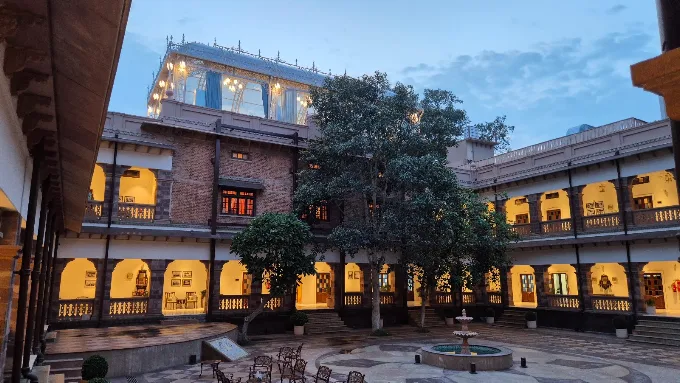
The strongest heritage spaces are the ones that do not need to explain themselves. You feel the scale in the courtyard, the craft in the ceiling and the calm in the way the building holds the day.
The hotel works particularly well because the energy of the city and the calm of the property are so different.
Temple-focused travellers can stay near the spiritual centre rather than spending extra time crossing the city for each visit.
Courtyards, lawns and verandah-like corridors create natural places to pause after crowded sightseeing and darshan routes.
Guest rooms bring contemporary ease into a property whose common spaces remain visibly rooted in heritage design.
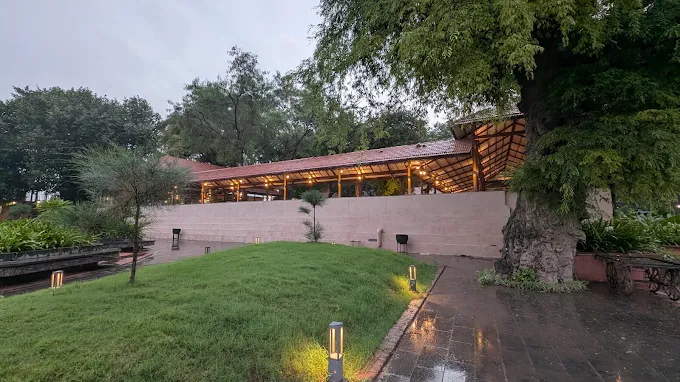
The rooms provide rest, but the strongest memory often comes from the spaces between them—the arched entrance, the courtyard, the galleries, the evening lights and the feeling of being close to Mahakal while staying somewhere visually distinctive.
Contact the property for the latest room inventory, current tariffs and stay requirements.
Plan temple darshan and hotel check-in together for an easier Ujjain visit.